
Exploring the World of Fantasy Sports Vs Traditional Sports Betting
When comparing fantasy sports and traditional sports betting, it’s important to consider the distinct approaches each offers. Fantasy sports involve creating a virtual team of real players and competing based on their actual performance in games. This form of engagement requires strategic thinking, player knowledge, and statistical analysis to build a successful team.
On the other hand, traditional sports betting involves wagering money on the outcome of sporting events. It is more reliant on luck and chance, as bettors place bets on specific outcomes or results without direct control over the players’ performances.
The decision between fantasy sports and traditional sports betting hinges on personal preferences and the level of involvement one seeks. Fantasy sports appeal to fans looking for an interactive and strategic way to engage with sports, while traditional sports betting may attract those seeking the thrill of risking money for potential financial gain.
Ultimately, the choice between fantasy sports and traditional sports betting depends on individual interests, skill sets, and risk tolerance. Both avenues offer distinct experiences within the realm of sports entertainment, catering to a wide range of enthusiasts.
Key Takeaways
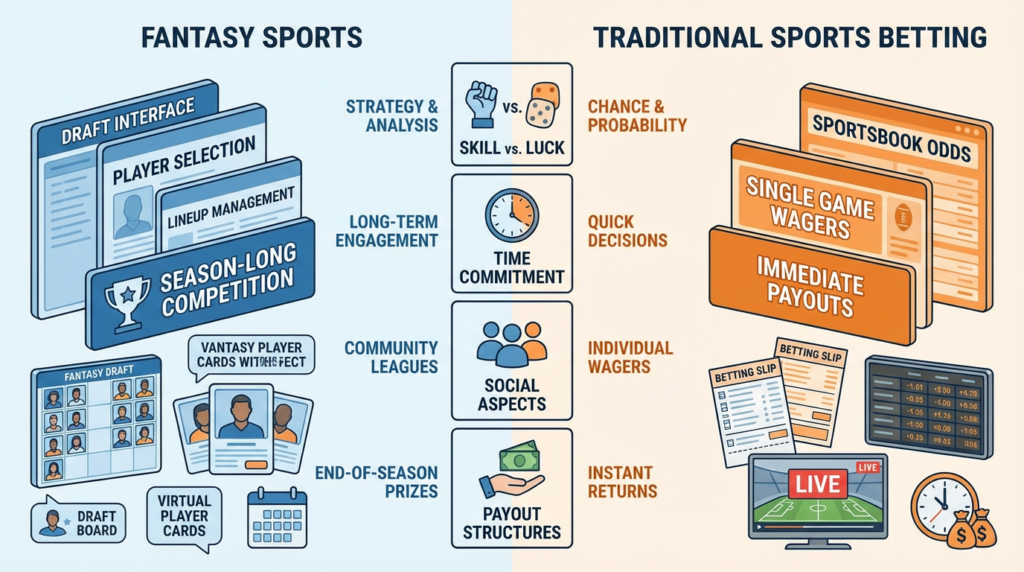
Comparing fantasy sports to traditional sports betting reveals distinct differences in their underlying dynamics. Fantasy sports involve a considerable element of skill and strategy, where participants must carefully analyze player performance and make informed decisions to build successful teams. In contrast, traditional sports betting tends to rely more on luck, as outcomes are often determined by unpredictable factors such as injuries or referee decisions.
One key feature of fantasy sports is the long-term engagement it offers. Participants are actively involved in managing their teams throughout a season, constantly strategizing player selections and trades. This sustained involvement can deepen the enjoyment and sense of ownership in the game. On the other hand, traditional sports betting typically provides quicker outcomes, with bets settled within a single game or event, offering the potential for immediate financial gains.
Both fantasy sports and traditional sports betting combine elements of knowledge and chance in their outcomes. While fantasy sports reward participants who possess a deep understanding of player statistics and game dynamics, luck can still play a role in individual player performances. Similarly, traditional sports betting requires a level of sports knowledge to make informed bets, but ultimately, unexpected events can heavily influence the final results.
In terms of social aspects, fantasy sports create opportunities for camaraderie, competition, and interaction with other participants and favorite teams. The team-building process and shared excitement over player performances can foster a sense of community among participants. Traditional sports betting, while also facilitating social interaction through shared interest in sports, tends to focus more on individual wagers and outcomes rather than team-based engagement.
Overall, the differences between fantasy sports and traditional sports betting reflect varying levels of skill, engagement, and social interaction, offering distinct experiences for enthusiasts of both formats.
Fantasy Sports: A Deep Dive
Fantasy sports have experienced a surge in popularity in recent years, offering fans a unique way to engage with their favorite sports. Participants in fantasy leagues take on the role of team managers, selecting real-life players from professional sports teams to compete against other fantasy squads. The performance of these chosen athletes in actual games directly impacts the success of the fantasy team.
Strategies, player trades, and close monitoring of player statistics are key components in gaining a competitive advantage over opponents. Fantasy sports encompass a variety of formats, ranging from season-long leagues to daily competitions, accommodating diverse preferences and skill levels. This dynamic platform provides an engaging and interactive sports experience for enthusiasts.
Traditional Sports Betting: What to Expect
In traditional sports betting, participants engage in wagering on the outcomes of sporting events. This form of betting offers a variety of options, including basic bets on the game’s winner and more intricate wagers such as point spreads and over/under bets. Bookmakers provide odds that determine potential payouts, with favorites and underdogs carrying different risk levels.
Successful traditional sports betting often involves thorough research into statistics, team performance, and other relevant factors to make informed betting decisions. It’s a dynamic environment where the excitement of sports is intertwined with the potential for financial returns.
Skill Vs Luck: Analyzing the Factors
In assessing the interplay between skill and luck in sports betting, it’s evident that a blend of knowledge and chance significantly impacts outcomes.
-
Skill: Understanding statistics, player performance, and team dynamics can offer a competitive advantage.
-
Luck: Unforeseen events and random occurrences frequently influence results in unpredictable ways.
-
Research: Thorough research enhances the likelihood of making well-informed decisions.
-
Intuition: Occasionally, a hunch or instinct can contribute to accurate predictions.
Engagement and Interaction Opportunities
Engagement and interaction opportunities are prevalent in the realm of sports betting, offering a platform for enthusiasts to connect with their favorite teams and players on a deeper level. Whether opting for fantasy sports or traditional sports betting, both options provide distinct ways to engage with the sports world.
In fantasy sports, participants can assemble their own teams, manage players, and strategize to compete against friends or other enthusiasts.
Conversely, traditional sports betting enables individuals to place wagers on real-life games, enhancing the excitement and emotional investment in the outcomes. Regardless of the chosen avenue, these opportunities foster a sense of camaraderie, competition, and shared passion among fellow sports fans.
Choosing the Right Path: Personal Preference
When making a choice between fantasy sports and traditional sports betting, it’s important to consider your personal preferences. Each option offers distinct experiences, so selecting the one that aligns best with your interests is crucial. Here are some factors to help guide your decision:
-
Skill vs Luck: Fantasy sports involve a significant element of skill, where knowledge and strategic decision-making play a key role. In contrast, traditional sports betting can lean more towards luck, as outcomes are often influenced by unpredictable factors.
-
Long-Term vs Instant Gratification: Fantasy sports typically require a season-long commitment, offering a sense of long-term engagement and investment. On the other hand, traditional sports betting provides quicker outcomes, leading to instant gratification based on shorter-term events.
-
Social Interaction: Fantasy sports often involve a social aspect, allowing you to compete against friends or join leagues for shared experiences. Traditional sports betting tends to be more individually focused, with outcomes directly impacting the bettor.
-
Risk Tolerance: In fantasy sports, the risk is generally more controlled, as your success relies on strategic choices rather than direct monetary stakes. Traditional sports betting may involve higher stakes and potentially greater risk, depending on the bets placed and outcomes.
Considering these factors can help you make an informed decision based on your preferences and comfort level with skill, commitment, social dynamics, and risk management.
Conclusion
When deciding between fantasy sports and traditional sports betting, it’s important to consider the differences in gameplay and strategy. Fantasy sports involve managing a virtual team of real players and competing based on their statistical performances, requiring a deep understanding of player performance and matchups. On the other hand, traditional sports betting involves wagering on game outcomes, often based on odds set by bookmakers.
Both fantasy sports and traditional sports betting offer unique ways to engage with sports, with fantasy sports emphasizing team management skills and statistical analysis, while traditional sports betting focuses on predicting game results. Each option appeals to different preferences, whether it’s the strategic challenge of fantasy sports or the excitement of betting on game outcomes.
Ultimately, the choice between fantasy sports and traditional sports betting comes down to personal preference and the level of involvement desired. Both provide avenues for competition, engagement, and entertainment within the realm of sports, catering to a range of interests and approaches to sports enjoyment.